
How to Remove Plastics from Biowaste Cost Efficiently and at an Industrial Scale at Composting Facilities
Authors: Alina Räkköläinen, Anna Nurmi, Lucienne de Waal, Nelly Plukka, Valerian Kaiser https://www.idbm.aalto.fi/
The TREASoURcE project, in collaboration with Aalto University’s International Design Business Management (IDBM) master’s programme, explored solutions to reduce plastic contamination in industrial biowaste composting through a case study with Kekkilä, Finland’s leading landscaping products manufacturer. The project developed a three-stage strategy towards cleaner and more sustainable biowaste processing — from immediate depackaging solutions to future biological innovations targeting microplastics.
Read the report:
The Most Important Requirements for Success
Stakeholder support
Stakeholder engagement is essential, that improves decision-making and reduces risks.
Data
Review the current process conditions, obtain data on new technologies, and analyse and compare possible opportunities.
Safety
Safety is a key requirement when implementing new technologies because the soil products must be safe for the people and environment.
The Challence of the Contaminatio
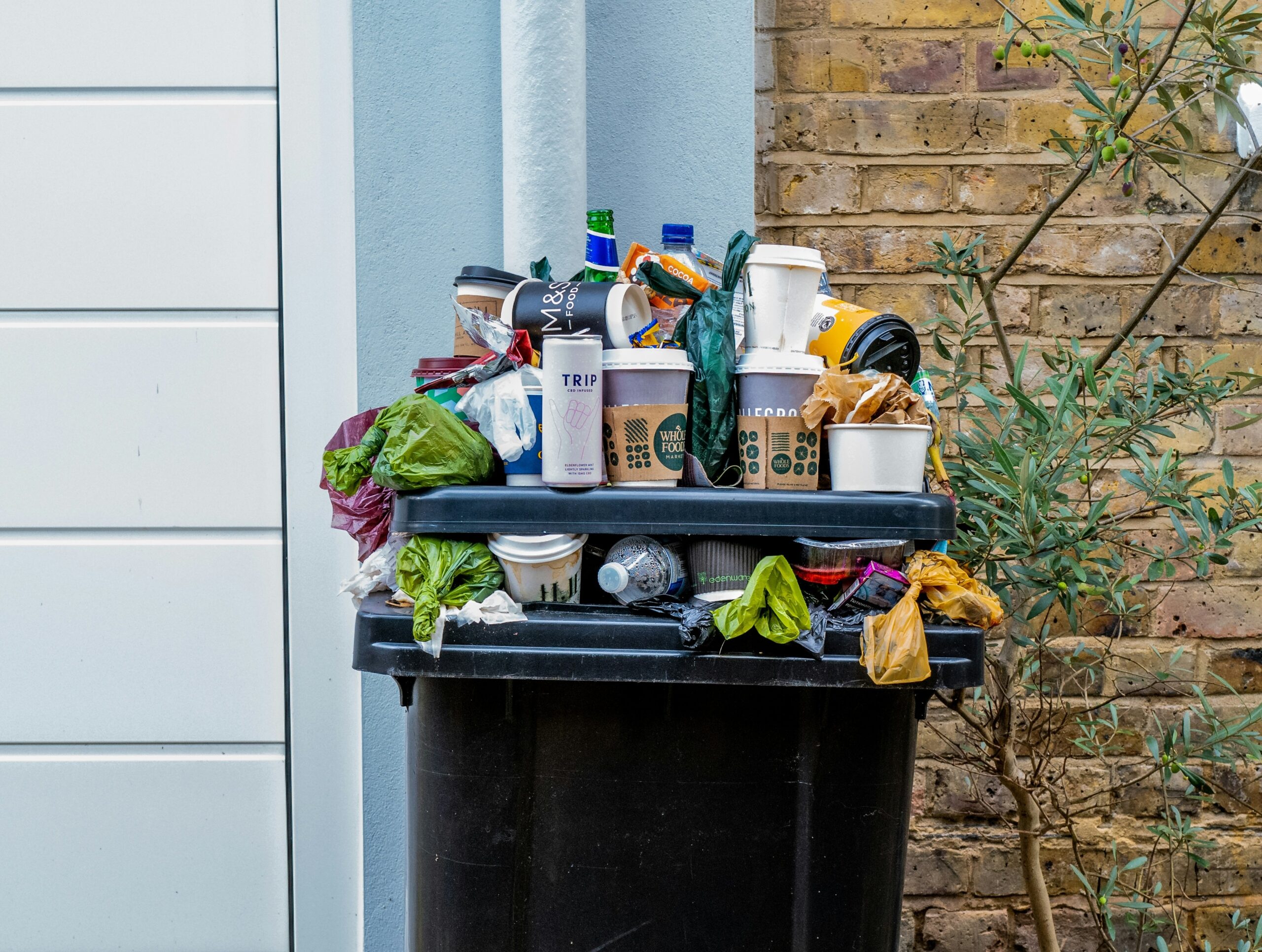
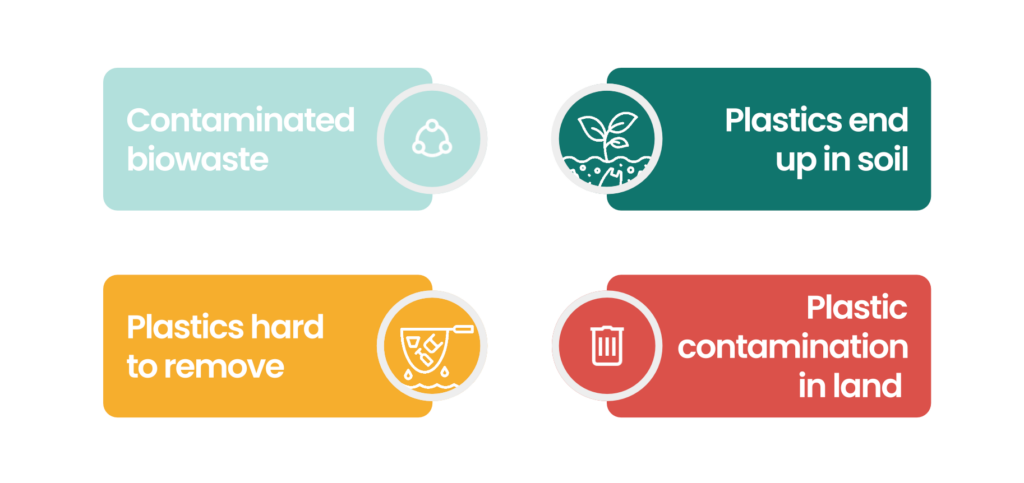
The contaminated material that Kekkilä’s facility in Joutseno receives for soil production comes mostly from grocery stores where regulation and lack of appropriate resources allow for food products to be disposed in their original packaging. The company has not found an effective way to remove the plastics from packaged biowaste that causes some plastic residues in the final product after their current separation and composting process. This compromises compost quality, leads to customer complaints, weakens brand image, and raises long-term environmental concerns such as microplastics in soil. While their products significantly meet current regulatory standards, the quality expectations from consumer side highlight the need for more effective solutions.
The problem was approached through interdisciplinary research that combines systems analysis, technology assessment, field studies, and international benchmarking (including insights from South Korea’s advanced food waste recycling system). Plastic contamination in bio waste is a systemic issue across the entire value chain. Kekkilä’s operations were chosen as the point of intervention as it allows for the biggest immediate impact.
Three-horizon strategy
Based on research, a three-horizon progressive strategy was developed for reducing plastic contamination:
- Short-term strategy
This intervention would introduce depackaging technology at the composting facility. Based on Lopes et al. (2019) research, this solution could remove up to 98-99% of visible plastic contaminants from biowaste combined with current downstream screening and can be immediately implemented. This short-term vision allows for a prompt and cost-effective way to restore product quality and reduce customer complaints. - Mid-term strategy
This horizon suggests a transition towards data-driven automated waste processing. The depacker’s operational data will be collected to for a collaboration initiative between a local technology focused university and Kekkilä. Then, an advanced depackaging process will be developed, which would potentially combine computer vision and robotics. The goal is to be able to remove other impurities in addition to plastic packaging more effectively from the biowaste stream and reduce the need for physically demanding labour cost effectively. - Long-term strategy
In the future, the project aims to go beyond technologies and explore biological solutions. Plastic eating microorganisms offer the possibility to remove microplastics that technological systems can’t remove. In collaboration with laboratories, these organisms and their efficiency will be tested before they are introduced into practice. The goal is to not only remove plastics from Kekkilä’s products but also support ecological sustainability.
The proposed technology-driven strategy includes several steps towards plastic-free soil. However, the biowaste processing system is complex and is affected by many factors. The project discovered barriers to grocery store level separation that include time constraints, lack of resources, and unclear economic incentives. The international benchmarking in South Korea highlighted the importance of regulatory frameworks, financial incentives, and cultural practices in enabling better quality waste streams.
Overall, this project provides Kekkilä and other stakeholders with feasible recommendations, a clear strategic roadmap, and support for the future transition to cleaner biowaste systems. Our findings also reinforce the importance of collaboration between sectors, as meaningful progress requires co-operation from industry players, policymakers, and researchers. This long-term strategy enables gradually minimising the amount of plastic impurities in soil.
Sources:
Lopes, A. do C. P., Robra, S., Müller, W., Meirer, M., Thumser, F., Alessi, A., & Bockreis, A. (2019). Comparison of two mechanical pre-treatment systems for impurities reduction of source-separated biowaste. Waste Management, 100, 66–74. https://doi.org/10.1016/j.wasman.2019.09.003
Legislative Aspects
The soil industry is regulated, and soil products have strict quality limits for e.g. nutrients and plastic impurities. The EU Fertilizer Regulation (EU) 2019/1009 (Regulation EU 2019/1009) is the most directly relevant instrument to this system. It lays down rules for the placing fertiliser product on the market and the plastic impurity limits in fertilising products tightening from 5g/kg to 2.5g/kg in 2026. It is necessary to follow changes in the industry and remain aware of the impact of new regulations on a company’s operations.
Technology
Technology must be customized to fit a company’s needs and context. The amount and sizes of the plastic impurity particles vary, which affects the choice of technology. For example, it was important that the separation technology could handle food packaging and not significantly reduce the organic matter yield ratio. A longer-term strategy can be created for a company, where visible plastics are first removed cost-effectively using a depackaging machine, after which microplastics are removed by microbes and the process efficiency is further developed. Therefore, the investment is not focused on only one period but rather allows for flexibility and a gradual reduction in the amount of plastic.
Finance
- Short-term objective finances
A potential machine that could be installed at the Kekkilä composting facility would require £55,000 (approximately 70 000 €) initial investment (Waste Food Solutions Ltd, accessed 18.04.2026). A rough estimate for total cost of ownership is estimated to be 179 000€ (Soontact, accessed 20.04.2026). Since calculations are based on estimates, it is important to note that the total cost of ownership can vary a lot in practice. This would not need public funding.
Source: Soontact (accessed 20.04.2026). How much does a packaging machine cost. https://soontact.com/how-much-does-a-packaging-machine-cost/ - Mid-term objective finances
The aim is to develop this concept cost effectively since it will be conducted in collaboration with local academic society. This objective would be funded either by composting facility (private) or publicly. - Long-term objective finances
Ideally, the project will be continued in collaboration with a university, depending on if the respective university has the necessary laboratories for testing. Since the technology is still at Technology Readiness Level 3, considerable investments still have to be taken. Estimating the exact cost is hard, since that process will take multiple years.
Stakeholders
Collaboration with stakeholders is essential in the implementing new solution. A system can include many different stakeholders. In technology-based solutions, it is especially important to find suitable machine suppliers, collaborate with plastic-eating microbe researchers, manage regulators, and ensure customer satisfaction.
Society
The problem of packaged biowaste is linked to constant food availability for consumers in grocery stores which inevitably leads to overstock. The current food consumption model is therefore one of the leading causes of this problem. Workers dispose of expired food products in a time pressure which doesn’t leave time for proper sorting. This project also aims to create social wellbeing by reducing physically demanding and unpleasant work in biowaste handling.
Environment
The strategy of this project aims to reduce plastic contamination in the environment which will benefit ecosystems and animals. Through a successful implementation of this strategy the soil that is laid on the ground will contain less impurities. Consequently, less plastics end up in the ecosystem. Visible plastics are a clear impurity that should not end up in landscapes but also microplastics pose a threat as they can be absorbed to plants and vegetables through the soil. The goal of this project is to create impurity free soil which creates cleaner food-growing environments, and reduced plastic exposure for ecosystems and animals.
Governance
Since Kekkilä is well below the mandated government standards, the effects of a tightening legislation are not that much of a concern in the short term, therefore they are not affecting it much at the moment. Mandating the separation of plastics from biowaste already at the supermarket, where most of the mixed waste comes from, would eliminate the consistent need for the three-step solution at the biowaste/sorting facilities. It would only be needed to go through the materials and sort out the prevalent plastics once.
Safety
Safety remained an important consideration throughout the project. When removing food items from plastic packaging at an industrial scale sharp objects are often used to open packages. For example due to this reason sorting organic product from plastic packaging directly at the source is not a viable option. The strategies for introduced in this project for removing plastics are safe to operate for workers.
Plastics and especially microplastics pose threats to human health. Their effects in the human body are not yet fully understood but they have been classified as a health threat. Another safety consideration that came up during the project is weather plastic eating species are safe to release to the world. It is essential to consider if they will start eating away the infrastructure for example the pipes in the ground.
Organisation
An organisation’s value chain and process conditions, such as process capacity must be known clearly.
Steps for a Successful Implementation
1. Determine and document current process conditions.
Identify the biggest cause of plastic pollution and challenges.
2. Map solutions across the entire value chain.
Determine the scope and duration of a possible investment. Talk to different stakeholders along the value chain and look for best practices in similar fields.
3. Pick the most viable solution out of the different integration points.
Since there are many points in the value chain where solutions could be developed, evaluate and choose the option that has the most potential.
4. Agree on a long-term pathway.
If some of the mechanical systems already exist, there might not be a need to complete all steps by oneself. Reach out to possible partners to facilitate cooperation and coordination.
5. Start to plan the investment.
Decide on what needs to be allocated in terms of workforce, machines, and resources in order to make the necessary changes.
6. Implement the changes