
How to Improve Rigid Plastic Recycling Through Practical Initiatives
Authors: Mayu Nishikawa, Pinja Tiainen, Savva Kuparinen, Jonas Wendland, Niko Kärkkäinen
https://www.idbm.aalto.fi/
This overview examines practical system-level initiatives for rigid plastic recycling explored during Aalto University (Finland) International Design Business Management research project. The research project was conducted to support TREASoURcE objectives related to plastic recognition at the consumer level. The objective of this overview is to share the findings on the replicability and transferability of the explored initiatives to various local contexts.
Read the report:
The Most Important Requirements for Success
Multidisciplinary and multicultural research
Consider leveraging the skills of a multidisciplinary and multicultural team to identify assumptions and blind spots early. In the research, benchmark various geographical areas and current initiatives as well as explore adjacent scientific fields for a wider context.
Anchor the research while managing wide applicability
Anchor your research in a real-life problem for instance through collaboration with an industry partner. However, maintain company-agnostic approach to satisfy broader applicability, as a logistically perfect solution for one stakeholder may disregard other actors.
Stakeholder engagement
Engage various actors representing different geographical areas, multiple stakeholders, and diverse supply chain steps in order to identify transferable findings. This will support understanding of distinct perspectives and enables receiving of specialised feedback.
The following replicable practices and implementation considerations are intended to support organisations, municipalities, and project teams in developing effective rigid plastic recycling initiatives within their own regional and institutional contexts. As waste management systems, legislative frameworks, consumer behaviour, and technological capacities vary significantly across markets, the presented practices should not be understood as fixed solutions, but rather as adaptable guidelines. By evaluating the interconnected legislative, technological, financial, organisational, and societal dimensions outlined below, stakeholders can better identify opportunities, barriers, and context-specific pathways for improving the collection and recycling of non-packaging rigid plastics.
Legislative Aspects
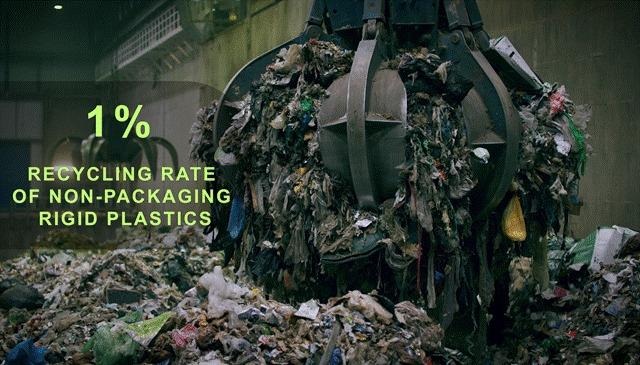
Have a firm grasp on the current legislative environment, in particular on whether legislation mandating non-packaging rigid plastic recycling exists in your region or industry and in what form. The necessity to implement rigid plastic recycling initiatives emerges chiefly from the fact that in many global markets, including EU, the Extended Producer Responsibility (EPR) does not extend to solid plastic products such as crates, buckets, and toys. Therefore, these items are seldom collected from households and systematically end up in mixed waste and are eventually incinerated. Consequently, an important prerequisite of rigid plastic recycling initiative implementation involves a lack of sufficiently robust legal environment. However, you could also consider the implementation of the initiatives as complementary methods in addition to the existing recycling framework.
Technology
Closely evaluate the current technological state of art of your industry or market. The implementation of explored initiatives, namely recycling pop-ups, seasonal waste collection, and door-to-door collection relying on reverse logistics, is in itself largely technology-agnostic. However, in many areas recycling of rigid plastic relies on individual consumer behaviour, their capacity to identify different plastic categories, as well as their perceived convenience of recycling. In this regard, your team needs to take into account whether it is feasible, desirable, or viable in your region to implement rigid plastic recycling through initiatives leveraging consumer behaviour, or whether it is more convenient to rely on the cutting edge technology such as AI-sorting robots, which in the future could make the household-level sorting obsolete.
Finance
Your team should also consider the investments and operational costs involved in implementation of the explored initiatives. In particular, the costs of waste transport are of relevance, if it is not covered by EPR. Indeed, even if successful collection of rigid plastics is implemented, and local businesses would be interested in the resource, a question of responsibility for transporting costs could present a crucial negotiation hurdle. If existing logistics are in place, this aspect could be simpler, however establishing new transportation routes could be a difficult financial consideration that your team would need to evaluate in collaboration with various stakeholders.
Stakeholders
Waste management is an issue which concerns the government, the environment, consumers, and businesses. Therefore, your team should consider wide stakeholder engagement in order to gage the potential for public-private collaboration as well as the framework for division of responsibilities including financial responsibility. In addition, engagement of consumers, whose behaviour and participation has a direct impact on the implementation success, is crucial.
Society and Environment
Efficient circular economy is in the interest of the wider society and the environment. Importantly, the collection and recycling of rigid plastics, that otherwise would end up incinerated conserves resources made out of limited and polluting fossil fuels, and allows for usable resources to be recovered and returned into circulation as new products. However, your team needs to consider that recycling and especially sorting on a household-level is subject to individual consumer values and behaviour. Therefore, your team should consider effective means of influencing consumer hesitance, their attitudes, and perceived convenience of recycling in order to achieve the best results.
Safety
The safety of recycled polymers is still an under-researched topic. Therefore, in implementing the explored initiatives your team should consider that repeated recycling of rigid plastics might lead to concentration of levels of certain potentially harmful chemicals, which would be released back to the market if sufficient research and supervision is not performed. As a general point, your team should also keep in mind that particularly manual sorting at waste management facilities is work involving a heavy work environment including strong smells and potentially hazardous materials.
Organisation
For the most comprehensive results, you should consider leveraging a skillset of a multidisciplinary team with complementary educational, professional, and cultural backgrounds. Our project team consisted of students from business, technology, law, and design backgrounds, which enabled a broad and systems-oriented approach, increasing the relevance of findings across diverse scientific contexts. In addition, a multicultural composition allows for the identification of assumptions and blind-spots at early stages, as well as ensures that proposed solutions are not implicitly tailored to a single cultural or institutional setting.
Checklist on How to Set-up a Rigid Plastic Recycling Pop-up
1. Research the market background
Why are the rigid plastics not collected in your region/market? Is it an issue of infrastructure or lack of legal environment mandating collection?
2. Research consumer behaviour
Is there a reason for the lack of consumer participation? Is it an issue of accessibility, perceived convenience, or lack of collection points?
3. Identify an accessible location for a recycling pop-up
Identify a location which is frequently visited by consumers, for instance a mall. This will increase accessibility and would allow disposal with minimal additional time and effort.
4. Decide on the nature of the pop-up
Will the pop-up function for purely informational purposes or will it function as a temporary collection point?
5. Negotiate the financing and transportation
Engage public and private actors for financing and organisation of the pop-up. Who will provide the staff and if waste is collected, who will pay for its transport and disposal?
6. Organise marketing and engagement
Organise design of marketing, for instance banners and the general design of the pop-up. What information will be given to the consumers? How do you draw their interest, for instance with games or quizzes?
7. Gather data and gage future viability and results
Gather data on consumer behaviour, participation levels, and the type of waste disposed of.