

How to Replicate a Community Sharing Day
Author: Liina Helmoja, City of Tartu
This guide provides a structured framework for municipalities, NGOs and community organisations that want to organise a community driven Sharing Day, promoting circular economy principles such as reuse, repair and sharing. The model is scalable and adaptable to different local contexts.
Read more about our use case:
The Most Important Requirements for Success
Strong Local Partnership
A committed and competent partner organisation is essential to ensure credibility, operational capacity and high-quality workshops. Clear roles and shared responsibility are critical.
Active Community Engagementility Assessment
The event must prioritise hands-on participation over passive information sharing. Practical activities increase motivation, learning impact and long-term behavioural change.
Clear Operational Planning
Well-defined logistics, responsibilities and risk management ensure smooth implementation. Without strong coordination, community events quickly lose effectiveness.
Define Scope and Strategic Alignment
Clearly defining the scope and strategic direction of the event is an essential starting point for successful planning and implementation. This step ensures that the purpose of the activity is well understood, aligned with goals, and reaches the audience.
- Clarify the primary objective: awareness raising, skill-building, behaviour change and community engagement.
- Align the event with local sustainability, waste prevention and circular economy strategies.
- Define measurable targets (e.g., number of participants, number of workshops, stakeholder involvement).
- Identify the main target groups (families, schools, youth, seniors, NGOs, municipal staff).
Secure a Competent Local Partner or Partners
Establishing strong local partnerships is a critical first step in ensuring the success and relevance of the initiative. Local partners bring contextual knowledge, networks, and practical experience that significantly enhance implementation quality.
- Identify an organisation with experience in environmental education, community work or practical workshops.
- Establish roles and responsibilities.
- Agree on logistics: venue, materials, facilitators, safety requirements.
- Ensure joint decision making in programme design.
Key principle: Strong partnerships increase credibility, attendance and operational capacity.
Include at Least 3 Complementary Components:
To create a well-rounded and engaging event, it is important to combine different types of activities that appeal to diverse participants and learning styles. A balanced programme increases both impact and participation.
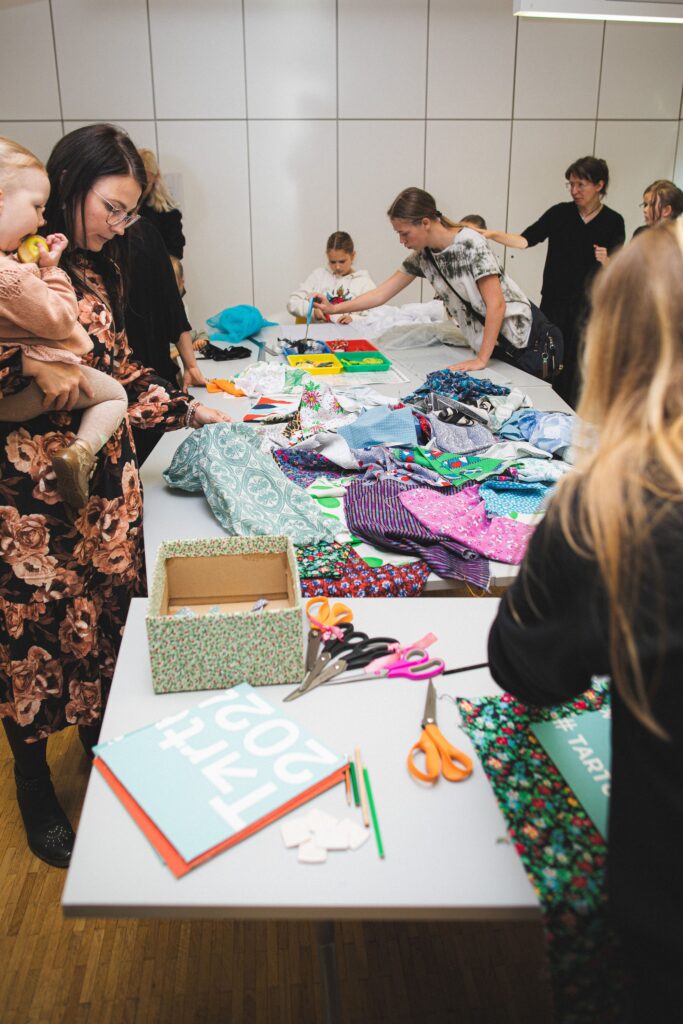
1. Swap Area – Organise an Item Exchange Space
- Define clear rules for acceptable items.
- Arrange volunteers to manage sorting and redistribution.
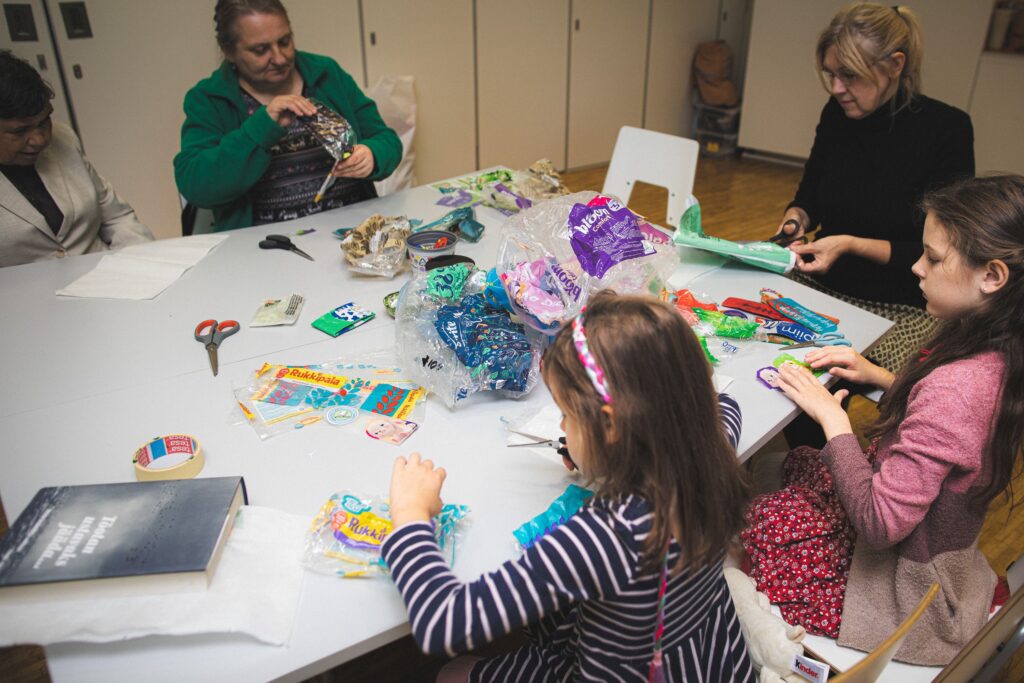
2. Hands on Workshops
- Focus on practical, achievable activities (repair, upcycling, textile reuse, packaging alternatives).
- Use accessible tools and low-cost materials.
- Provide clear instructions and facilitator support.
3. Educational component
- Include demonstrations, short talks or guided tours if relevant.
- Present local examples of sustainable practices.
- Presentations should be short and practical.
Key principle: Prioritise active participation over passive listening.
Ensure Accessibility and Inclusiveness
Designing the event to be inclusive and accessible ensures that a wide range of participants can attend and benefit. Reducing barriers increases both equity and overall impact.
- Make participation free of charge whenever possible.
- Select a centrally located, accessible venue.
- Design activities suitable for different age groups.
- Provide simple, clear communication about what participants should bring and expect.
Key principle: Reduce barriers to participation to maximise impact.
Communication Strategy
Effective communication is essential for attracting participants and setting clear expectations. A well-planned strategy ensures that the message reaches the right audiences in an understandable and motivating way.
- Use multiple channels: social media, municipal websites, newsletters, NGOs.
- Provide clear messaging: what to bring, what to expect, why it matters.
- Highlight practical benefits (save money, learn skills, meet community members).
Key principle: Practical framing increases participation more than abstract sustainability messaging.
Logistics and Risk Management
Careful logistical planning and risk management are necessary to ensure that the event runs smoothly and safely. Anticipating challenges in advance helps avoid disruptions and improves participant experience.
- Prepare a detailed event timeline.
- Assign clear responsibilities for setup, facilitation and cleanup.
- Ensure safety compliance for tools and materials.
- Prepare contingency plans (low turnout, excess items, facilitator absence).
Key principle: Operational clarity ensures smooth execution and positive participant experience.
Monitoring and Evaluation
Evaluating the event allows organisers to understand its effectiveness and identify areas for improvement. Systematic feedback helps turn a one-time activity into a scalable and repeatable model.
- Count participant number and workshop attendance.
- Collect feedback through short surveys or informal feedbacks.
- Identify improvements for future editions.
Key principle: Evaluation transforms a one-time event into a replicable model.
Plan for Continuity
To maximise long-term impact, it is important to extend the effects of the event beyond a single occasion. Encouraging ongoing engagement supports lasting behaviour change.
- Share workshop instructions or materials.
- Encourage participants to replicate activities at home.
- Consider repeating the event annually.
Key principle: Behaviour change requires repetition and reinforcement.
This structured approach enables municipalities and organisations to implement a Sharing Day that is practical, scalable and aligned with circular economy goals. By focusing on participation, collaboration and communication, the initiative can be effectively replicated across diverse communities.
Legislative Aspects
No specific legislative changes are needed to organise a Sharing Day. However, the event should follow existing rules related to public events, waste management, and safety.
Organisers need to comply with municipal requirements for public event permits. They should also follow regulations related to waste handling and the reuse of items, especially when collecting, exchanging, or redistributing goods. If tools or repair activities are included, it is important to have basic liability and insurance coverage.
Although the event can be organised within current regulations, a supportive legislative framework can make implementation easier. Policies that promote waste prevention, reuse, and circular economy practices, such as municipal sustainability strategies or national programmes, can help support the activity and its continuity.
Technology
No specific or advanced technology is required for this practice. It mainly depends on organisational capacity and community engagement rather than technical solutions.
Some basic technological tools can be used to support the event. Online communication tools are useful for promotion and outreach. Registration or survey platforms may be used to collect participant information or feedback if needed. In some cases, digital learning platforms can be used to share follow-up materials after the event.
Overall, the practice is designed to be low-tech so that it can be easily replicated in different regions, including areas with limited digital infrastructure.
Finance
The practice requires relatively low investment and can be implemented with modest resources. Costs mainly relate to the event venue, unless it is provided free of charge, as well as materials and tools needed for workshops. Additional expenses may include communication and promotional materials and, in some cases, compensation for staff or facilitators.
Operational costs depend on the size of the event but can remain low, especially if local partners contribute resources or services in kind. Public funding, such as municipal budgets or environmental grants, is often the most suitable source, particularly at the beginning. Private sponsorship or support from NGOs can also complement funding. While the direct business potential is limited, the event may create indirect economic benefits by supporting local repair services, artisans, and circular economy activities.
Stakeholders
The practice relies on collaboration between different types of stakeholders. It is important to involve municipal authorities, especially those working in environmental, sustainability, or community development areas. NGOs and environmental organisations can contribute expertise and support implementation, while educational institutions and local community groups help engage participants.
Volunteers and facilitators play a key role in delivering activities during the event. In some cases, local repair businesses, social enterprises, or circular economy initiatives can also be involved. Engaging stakeholders early helps build shared ownership and supports the long-term sustainability of the practice
Society
The practice provides social benefits by strengthening community interaction and raising awareness of practical sustainability. It helps participants learn about reuse and repair while encouraging more conscious consumption habits. The event can also support interaction between different age groups through shared activities and knowledge exchange.
The social dimension is important for successful implementation. Cultural attitudes toward second-hand goods, repair practices, and community participation can influence how the event is received. In some contexts, additional efforts may be needed to promote acceptance and participation.
Environment
The environmental impact of the practice is positive, although it is mainly indirect and based on behaviour change. The event supports waste prevention by encouraging reuse and repair, which helps extend the lifespan of products and reduce the need for new resources.
While the immediate impact of a single event may be limited, repeated activities can contribute to longer-term changes in consumption patterns and support broader circular economy goals.
Governance
The way the practice is organised and managed has a strong influence on its success. Collaborative approaches, where responsibilities are shared between municipalities and civil society organisations, can improve participation, efficiency, and overall impact.
Clear coordination, well-defined roles, and transparent decision-making are important for smooth implementation. Approaches that rely only on top-down management, without involving the community, may reduce engagement and limit long-term results.
Safety
The main safety considerations relate to the use of tools during repair activities, the number of participants in the space, and the handling of second-hand items. These risks are generally low but should be managed properly.
Basic safety instructions should be provided, and the use of tools should be supervised where necessary. It is also important to organise the space clearly to avoid overcrowding and to follow local safety requirements for public events. With these measures in place, risks can be kept manageable.
Organisation
The preparation of the event typically takes between two and four months, depending on its size and complexity. Coordination with stakeholders may require several weeks, especially when formal agreements are needed.
A small core team is usually sufficient to manage planning and coordination. This team can be supported by facilitators and volunteers during the event itself. Overall, the model is relatively simple to organise and can be scaled according to available resources and needs.
Replication Checklist
Before implementation, confirm that you have:
1. Defined objectives and target groups
2. Secured a committed local partner/partners
3. Designed swap, workshop and educational components
4. Ensured accessibility and inclusivity
5. Developed some kind of a communication plan
6. Assigned logistical responsibilities
7. Established monitoring and feedback mechanisms
8. Considered follow-up actions.