
Case Tartu | Community-Driven Sharing Day and Collaboration with Tartu Nature House
Author: Liina Helmoja, City of Tartu
As we explore practical ways to implement circular economy principles in Tartu, we are excited to share our journey in creating a community-driven Sharing Day in collaboration with Tartu Nature House, the Association of Municipalities of Tartu County, City of Tartu and the DD Foundation. This initiative aimed to demonstrate how citizens, local authorities, and educational organisations can come together to make sustainable practices tangible, engaging, and replicable.
Our goal was not only to showcase circular economy concepts but also to provide hands-on learning, foster social interaction, and establish a model that other communities could adapt.
By focusing on reuse, repair, and sharing, we sought to transform abstract sustainability ideas into visible, actionable experiences. This use case outlines our vision, objectives, planning process, implementation, and the outcomes of our initiative, as well as the ways in which the model can be replicated elsewhere.
Read our best practices for replication:
Vision and Objectives
Our vision for the Sharing Day was to create an inclusive, participatory event where citizens could actively engage in circular economy practices. We defined clear objectives that guided the design and execution of the initiative:
- Promote sustainable practices: Encourage citizens to embrace repair, reuse and sharing as everyday habits.
- Strengthen community engagement: Foster social interaction and collaboration among residents, NGOs and municipal authorities.
- Enhance educational opportunities: Provide practical skills and knowledge through workshops and hands-on activities.
- Test a replicable model: Develop an event format that can be adapted and scaled in other municipalities.
By aligning these objectives with broader city sustainability goals, we ensured the initiative contributed meaningfully to Tartu’s environmental and social development.
Development Process
The development of the Sharing Day unfolded in two main phases, combining extensive stakeholder engagement with careful planning.
Phase 1: Partnership Building
From the outset, we recognized that collaboration with an experienced educational partner was essential. Tartu Nature House brought expertise in environmental education, pedagogical design, and community outreach. Together, we defined roles and responsibilities:
Our team coordinated the overall concept, stakeholder engagement, communications, and logistics. Tartu Nature House provided the venue. We also had facilitators and educational content.
All decisions regarding programme content, audience targeting, and operational details were made jointly, creating a co-creative planning environment that ensured equal ownership and accountability.
Phase 2: Event Design and Planning
We designed the Sharing Day as a multi-layered experience, combining inspiration, hands-on participation, and learning. The programme included:
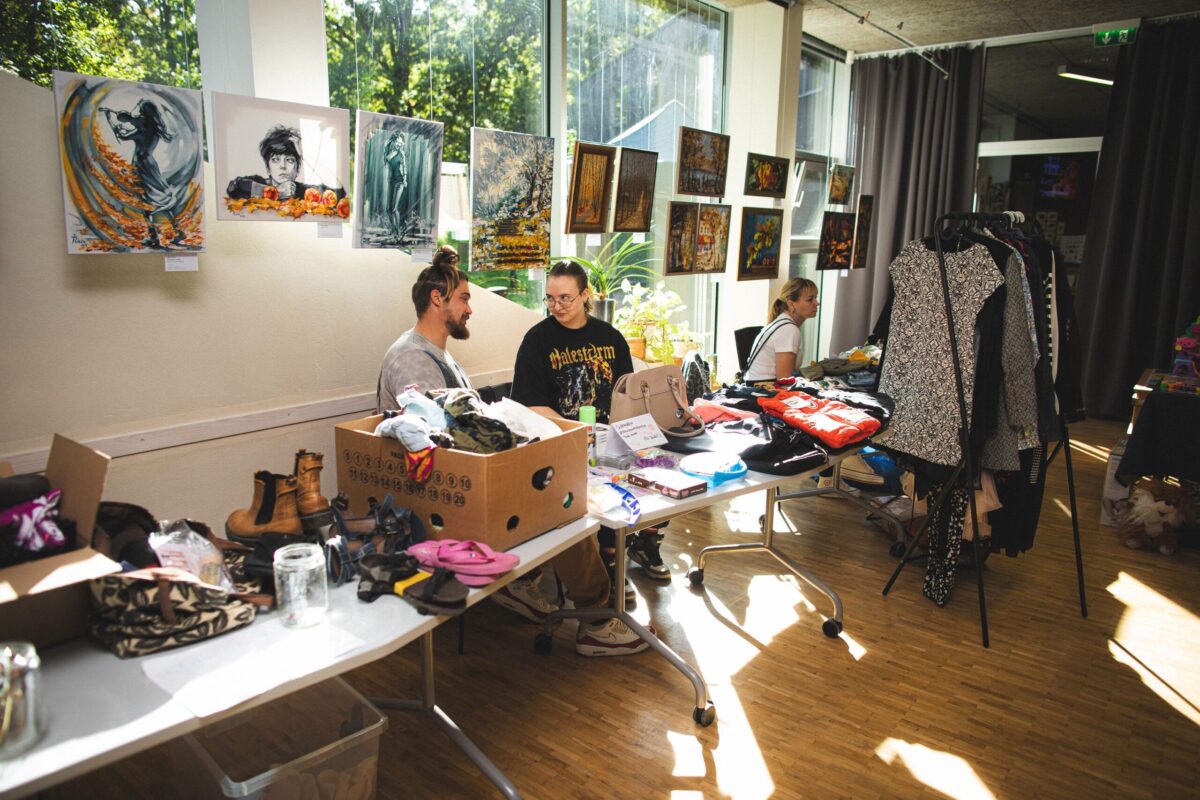
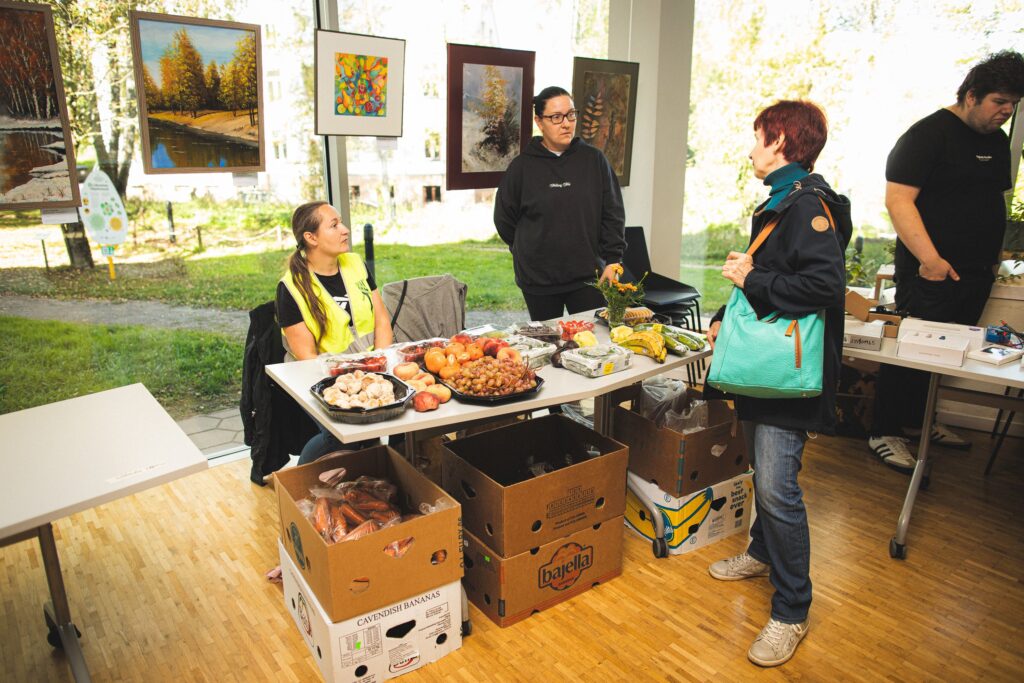
- Swap Market – Participants brought items for exchange and for sale. Plants, books, toys, and household goods circulated, creating an immediate and visible demonstration of resource reuse.
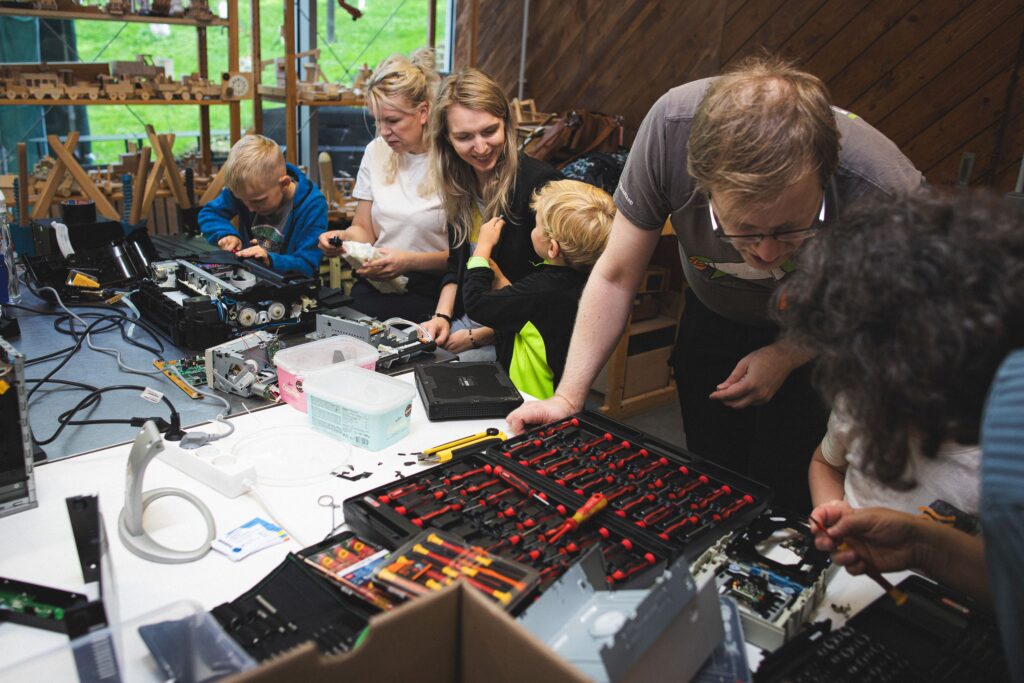
- Repair and Reuse Workshops were practical sessions enabled attendees to learn and apply new skills.
Activities included:
- Repairing small household items.
- Transforming recycled materials into new products, such as bookmarks made from plastic waste.
- Sewing reusable bags from old textiles.
- Creating beeswax wraps as alternatives to disposable packaging.
We also had guided tours at Tartu Nature House and they highlighted sustainable building solutions, demonstrating how environmental principles can be applied to infrastructure. This carefully structured programme ensured that all participants, regardless of age or experience, could engage meaningfully.
Implementation
Over 250 participants attended the event, including children, adults, seniors, and local activists. The event atmosphere was collaborative, practical and inspiring.
Key observations included:
- Concrete Learning: attendees gained hands-on experience with repair and reuse, translating abstract sustainability concepts into tangible action.
- Social Interaction: participants exchanged not only items but also knowledge, ideas and advice, fostering a sense of community.
- Empowerment: citizens realized that repair and reuse are accessible and achievable practices, encouraging long-term behavioral change.
- The combination of workshops, swap market, and tours created a holistic experience that engaged participants cognitively, socially, and practically.
Results and Impact
The initiative yielded both measurable and qualitative results:
- Participation and engagement: over 250 citizens actively took part in the event.
- Skill transfer: participants gained practical knowledge in repair, reuse and crafting.
- Community building: the event strengthened ties among local residents, NGOs, and municipal authorities.
Moreover, the collaboration itself demonstrated a successful model for municipal-NGO partnerships, emphasizing co-creation, shared responsibility, and mutual learning.
Lessons Learned
The key lessons that emerged from our experience include:
- Early and equal partnership: engaging partners from the start ensures ownership, commitment and shared expertise.
- Hands-on participation: practical workshops are critical for translating theory into action.
- Inclusivity: designing activities for all ages and skill levels maximizes engagement and community cohesion.
Conclusion
The Tartu Sharing Day, implemented in partnership with different partners, demonstrates that circular economy principles can be made tangible, engaging and actionable. By fostering collaboration and hands-on learning we aren´t only educated citizens but also built a replicable framework for other communities.
This initiative exemplifies how municipal authorities, NGOs and citizens can co-create solutions that advance sustainability, promote social cohesion and strengthen local capacity.