
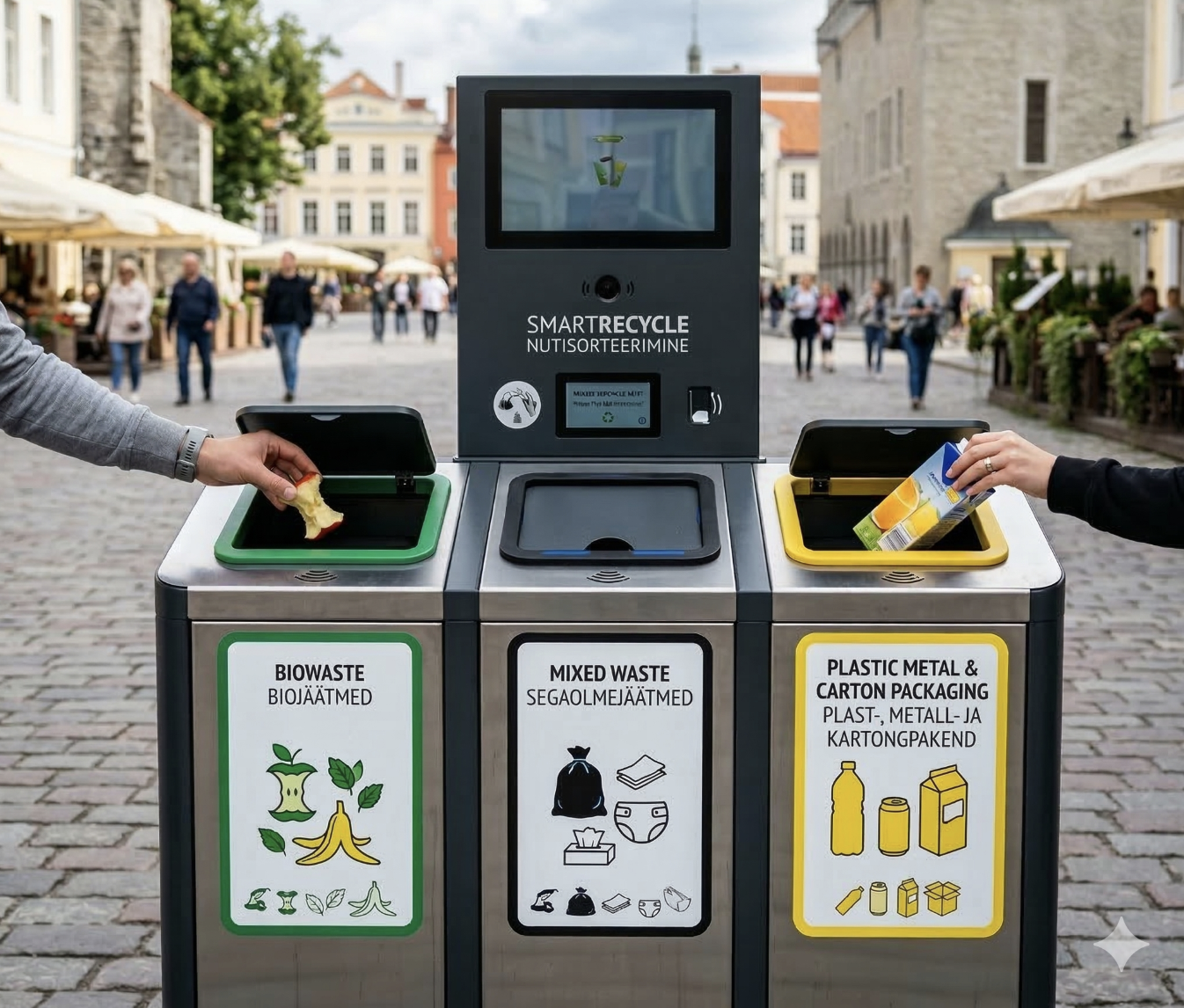
Case Tallinn | Smart Waste Bins Improving Public Cleanliness through Data-Driven Solutions
Author: Raigo Jaska, Tallinn Strategic Management Office
Smart solutions are becoming increasingly common. Now Tallinn is gradually introducing smart waste collection solutions in public spaces to improve cleanliness, reduce unnecessary waste collection trips, and make urban services more efficient. Less than a year after installation, the results are already visible and provide valuable insights for city management.
The Challenge of Public Waste Collection
Public waste bins in popular outdoor areas often fill up quickly, especially during peak seasons. Traditional collection schedules are usually fixed and do not respond to real-time demand, which can result in overflowing bins or unnecessary emptying of half-full or even empty bins. Smart waste bins provide real-time data on actual waste volumes and indicate when collection is really needed.
The smart waste bins address this challenge by combining:
- Waste compacting technology, allowing bins to hold significantly more waste than standard bins;
- Sensors and a digital platform, that enable waste operators to monitor fill levels and plan emptying based on actual need.
Project Background
Through the TREASoURcE project, Tallinn had the opportunity to pilot nine smart waste bins in public spaces. Each bin is equipped with a solar panel that charges an internal battery. The stored energy powers a sensor that monitors the fill level of the bin and activates a built-in compactor to compress the waste when needed.
Selecting Locations for the Waste Bins
Beachside locations were chosen because the bins are enclosed, preventing waste from being blown around in coastal areas. The bins also restrict access for birds compared to regular open bins. In addition, visitor frequency at beaches is highly unpredictable and uneven. Therefore, bins equipped with sensors that measure fill levels and can be monitored online are particularly suitable for these locations. As a result, emptying can be carried out based on actual need, avoiding unnecessary servicing of empty bins.
City’s Experience
- Cleaner surroundings: In areas where smart bins are installed, littering has decreased and waste is collected more effectively;
- Technical reliability: No major technical failures related to compacting or sensor systems have been reported;
- Vandalism resistance: Compared to traditional street bins, smart waste bins have proven to be more resistant to vandalism. Most notably, the smart bins have not been affected by graffiti, unlike many traditional street bins;
- Waste sorting and emptying: Waste has generally been collected correctly according to waste type. The bins are emptied in the same way as other public waste bins, but significantly less frequently due to compaction.
One of the most notable operational benefits is the reduced need for emptying. Since installation, only a few emptying requests have been necessary over several months, whereas comparable locations with conventional bins often require several emptyings per week during high season.
The digital monitoring platform is used by waste collection operators and city districts, who track fill levels and plan emptying independently. The platform also notifies users when a bin is about to hit capacity and needs to be emptied.
Key Lessons
Tallinn’s experience shows that smart waste bins are not a universal solution for all locations, but they are highly effective when placed strategically.
Here are some key lessons:
- Smart bins work best in high-traffic public areas such as promenades, parks, and waterfronts;
- Collection frequency can be significantly reduced, especially during both peak and off-peak seasons;
- Maintenance needs are low, and vandalism is less common than with traditional bins;
- Public perception is positive, with smart bins seen as a modern and practical urban solution.
Looking Ahead
Based on current experience, the city sees clear potential to expand the use of smart waste bins to other suitable locations. As cities across Europe seek smarter and more sustainable ways to manage public services, Tallinn’s example demonstrates how relatively small technological solutions can deliver measurable improvements in everyday urban management.