
Case Latvia, Lithuania, Poland & Germany | A Transferability Perspective for Second-life EV Batteries as Energy Storage Systems
Authors: Noman Shabbir, PhD and Jelizaveta Krenjova-Cepilova, PhD, TalTech
Second-life electric vehicle (EV) batteries can support circular economy goals while also helping regions respond to growing needs for flexibility, peak shaving, self-consumption, backup power and renewable energy integration. In TREASoURcE, we have explored this topic through Nordic demonstration sites, stakeholder interviews, a dedicated webinar and transferability discussions with partners and participants from target areas. Our focus has been not only on technical feasibility, but also on the conditions that make replication realistic and safe in different territories.
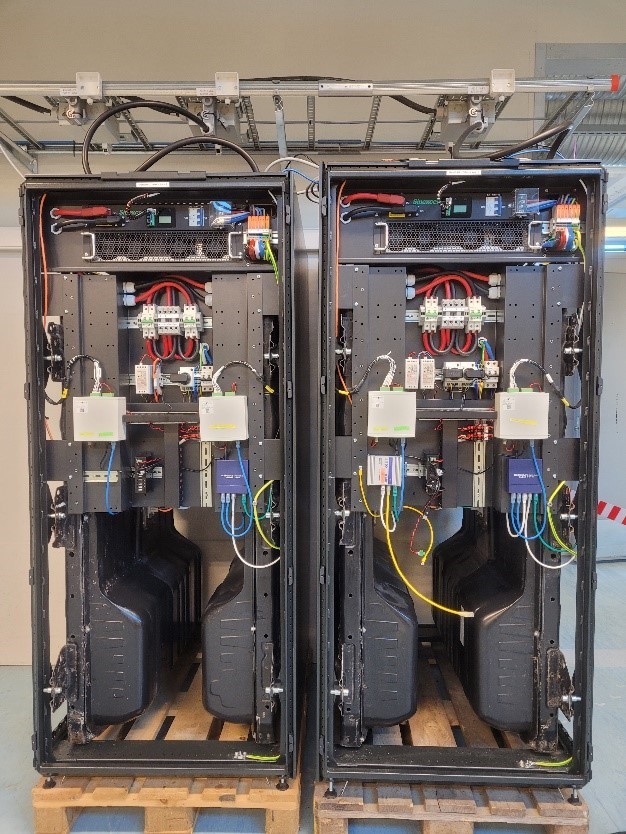
In practice, battery repurposing is never just a technology transfer exercise. It requires a workable combination of regulation, technical capacity, market demand, safety governance, access to battery data and a reliable value chain. The Nordic pilots presented in the TREASoURcE webinar showed that second-life batteries can already provide useful services in schools, municipal buildings and event venues when they are supported by proper testing, energy management systems, battery room design, ventilation, fire protection and operational monitoring. At the same time, the pilots also revealed important constraints: high development costs for each battery type, installation costs related to battery rooms, difficulties in interpreting manufacturer data, and strong competition from first-life batteries.
In this article, we look at how these experiences may be transferred to other TREASoURcE target areas. The analysis is based on previous project work, desk research, webinar presentations and interactive feedback collected during the TREASoURcE webinar on 27 February 2026. Instead of asking whether a Nordic solution can simply be copied, we ask under which conditions it can be adapted without losing safety, compliance or economic logic.
Read our best practices for replication:
Criteria of Transferability
Based on the project findings, six criteria stand out as particularly important when considering the transfer of second-life EV battery practices to new contexts.
- Regulatory and institutional fit. A transferable practice needs a clear legal pathway for moving batteries from first use to second-life applications. This includes questions of waste versus product status, responsibility for safety, permitting procedures, grid connection and end-of-life obligations.
- Technical and safety readiness. Battery testing, diagnostics, battery management, fire protection, ventilation and emergency procedures are essential. Replication is easier where local actors already have access to technical partners, testing services and safety authorities that can work together.
- Data access and traceability. The availability of battery history, chemistry, state-of-health information and diagnostics is a key enabler. Battery passport developments at EU level are expected to improve this, but today many regions still depend on partial or uneven data access.
- Market and business fit. Transferability depends on whether storage services actually create value locally. Peak shaving, self-consumption, backup, microgrids and flexibility markets differ from one region to another, and these differences directly affect business models.
- Infrastructure and supply chain capacity. Replication requires qualified integrators, installers, recycling partners, spare parts and operational support. It is also easier in regions where there is a visible pipeline of used EV batteries or access to reliable import channels.
- Stakeholder coordination and skills. Successful transfer depends on active cooperation between regulators, fire safety authorities, technology providers, building owners, grid actors, municipalities and research organisations. Training and trust building are as important as hardware.
Needs and Possibilities in Target Areas
Latvia already shows concrete movement toward implementation through companies working with second-life EV batteries as stationary storage. This gives Latvia an important advantage compared with regions where the topic is still purely conceptual. At the same time, the Latvian case points to clear needs: stronger insurance products, safer end-of-life handling, more predictable battery supply, and stronger disposal and recycling capacity. The best opportunities seem to lie in commercial and industrial storage, especially where aggregation and energy management can create value. Short-term action should focus on pilot scaling, safety validation and stronger links between business actors and public authorities.
Lithuania appears to be at an earlier stage, with fewer visible practical examples in second-life EV battery use. This means the immediate need is not large-scale replication, but preparatory work: awareness building, mapping relevant stakeholders, clarifying regulatory interpretation and identifying low-risk pilot opportunities. Lithuania has good potential to learn quickly from neighboring experiences if it combines local energy transition priorities with a small number of well-framed pilots. Municipal buildings, education campuses or community-scale renewable projects could provide an entry point.
Poland has strong potential for transferring second-life EV battery practices because of its larger market size and stronger industrial base. Compared to the Baltics, it is better positioned to support testing, repurposing, and larger-scale deployment. Transferability is high, especially for Nordic practices related to safety, testing, and cooperation between industry and authorities.
Northern Germany has comparatively strong transferability potential thanks to mature waste and circular economy policies, stronger repair and reuse ecosystems, advanced industrial capabilities and broader public discussion around circularity. The key need here is not basic awareness, but alignment between existing institutional capacity and second-life battery specific requirements such as testing, classification, fire safety and market design. Northern Germany is also well positioned to combine digital tools, regional industrial cooperation and municipal pilots. In this context, replication can move beyond small pilots toward more integrated local ecosystems for reuse, repair, testing and circular business development.
Overall Conclusions
Across the target areas, the most transferable elements are not single technologies but structured approaches: start with low-risk use cases; ensure clear ownership and monitoring; involve regulators and safety authorities early; build evidence through pilots; and connect technical learning with governance and market design. The webinar feedback confirmed that participants see high value in practical checklists, shared criteria and examples from real pilots. For the Replication Handbook, this means that transferability should be understood as a staged process. Regions do not need to be identical to benefit from Nordic lessons, but they do need to adapt those lessons to their own regulatory maturity, energy system needs, safety culture and implementation capacity.
The transferability of second-life EV battery practices depends on a combination of regulatory, technical, market, and institutional conditions. Table 1 summarizes the key criteria used to assess replication potential across the target areas.
Table 1. Core Criteria of Transferability for Second-Life EV Battery Practice
| Criterion | Explanation |
| Regulatory and institutional fit | Existence of a clear framework for battery classification, permitting, grid connection, and allocation of responsibilities among authorities and market actors. |
| Technical and safety readiness | Availability of battery testing, fire safety measures, ventilation requirements, emergency procedures, and qualified installers. |
| Data access and traceability | Access to battery history, diagnostics, and state-of-health information needed for safe and reliable repurposing. |
| Market and business fit | Presence of viable use cases such as peak shaving, backup power, self-consumption, or flexibility services. |
| Infrastructure and supply chain capacity | Access to integrators, installers, spare parts, recycling partners, and a reliable supply of suitable second-life batteries. |
| Stakeholder coordination and skills | Cooperation among public authorities, industry, grid actors, emergency services, and research organisations. |
Target-Area Summary
| Target area | Short assessment |
| Latvia | The most advanced among the Baltic target areas due to existing company activity in second-life battery applications. However, progress is still constrained by limited battery supply, weak insurance coverage, and insufficient disposal and recycling pathways. |
| Lithuania | Still at an early stage, with limited visible activity in second-life battery deployment. The main priorities should be awareness-raising, regulatory clarification, and a small number of carefully designed pilot projects. |
| Poland | Shows strong transferability potential due to its larger market size and stronger industrial base. It is better positioned to support testing, repurposing, and larger-scale deployment than the Baltics. |
| Northern Germany | High transferability potential because of stronger circular economy structures, industrial capacity, and municipal readiness. It offers favourable conditions for adapting and scaling second-life battery practices. |
References
European Parliament and Council (2023). Regulation (EU) 2023/1542 concerning batteries and waste batteries.
International Energy Agency (2024). Global EV Outlook.
TREASoURcE webinar on EV battery repurposing, 27 February 2026.
TREASoURcE transferability discussions and desk research, 2025–2026.